
Clout Ladder: Influencer
Who Gets to Belong?
Visibility, authenticity and fan judgement in VALORANT
“Micro-celebrity in VALORANT is not visibility — it is permission.”
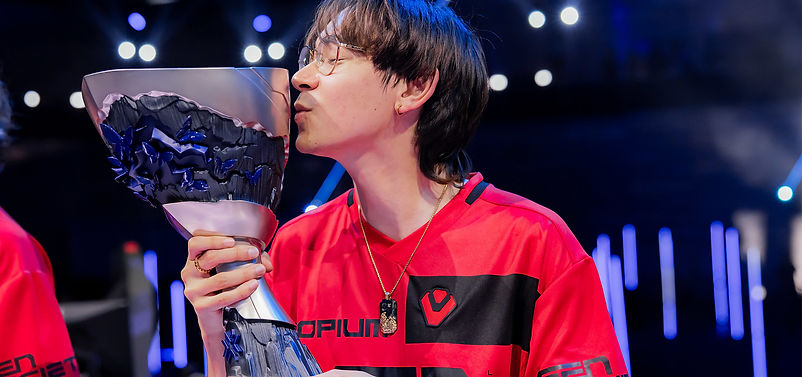
Professional players
”TRUE INSIDERS”


Streamers / creators
“platform-native”
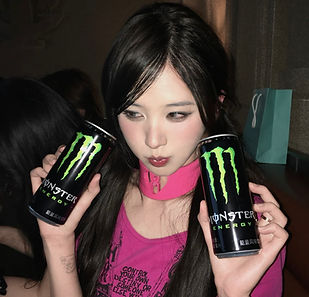
crossover
“conditional legitimacy”
celebrity
“conditional legitimacy”

Outsiders / controversial figures
(“rejected / mocked”)
No.1

TenZ — The Recognised Insider
Who he is
TenZ is widely regarded as one of the most skilled professional VALORANT players, known for his mechanical precision, consistency, and competitive success at the highest level of play.
Why he is visible
His visibility comes primarily from performance. Tournament highlights, clutch moments, and high-level gameplay circulate widely across platforms such as YouTube, Twitch, and TikTok. Unlike many other figures, his presence is repeatedly reinforced through gameplay itself rather than external promotion.
Fan response
Fans tend to describe TenZ using terms such as “best”, “insane”, or “unreal”, often focusing on skill rather than personality. His legitimacy is rarely questioned. Instead, his clips are used as benchmarks—something to learn from, imitate, or admire.
What this shows
TenZ represents a form of micro-celebrity that is grounded in skill-based recognition. His status is not simply a result of visibility, but of alignment with the core values of the community. In this case, authenticity appears stable—but only because it is supported by performance that fits existing expectations. This suggests that “being legitimate” is less about fame itself, and more about meeting the criteria that the community already accepts.
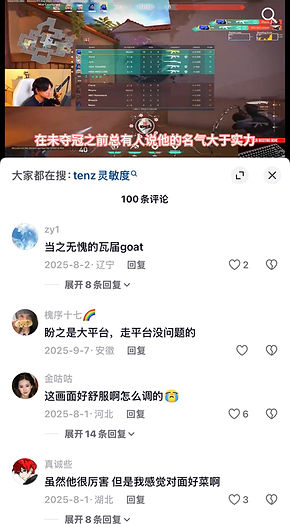

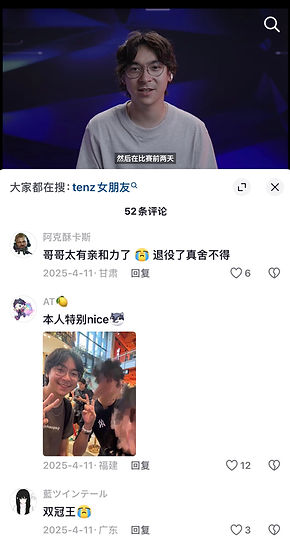
“GOAT”
“King of the game”
“We miss you”
No.2

Tarik — The Platform Insider
Who he is
Tarik is a former professional VALORANT and CS:GO player who has transitioned into one of the most prominent streamers in the VALORANT community. While no longer competing at the highest level, he remains highly visible through live streams, watch parties, and content creation.
Why he is visible
Unlike professional players such as TenZ, Tarik’s visibility is not based solely on performance, but on continuous presence. His streams during major tournaments attract large audiences, and his reactions, commentary, and personality-driven content are widely circulated across platforms. Visibility here is sustained not by moments of excellence, but by ongoing interaction.
Fan response
Fans often describe Tarik as “fun to watch”, “entertaining”, or “the face of watch parties”. However, compared to professional players, discussions around him are more mixed. While he is widely accepted, his legitimacy is sometimes framed differently—not purely through skill, but through his role as a mediator between the game and its audience.
What this shows
Tarik represents a shift in how micro-celebrity operates within VALORANT. His legitimacy does not disappear, but it changes form. It becomes less about proving skill and more about maintaining visibility, personality, and engagement. This suggests that authenticity is not a fixed category, but something that adapts to different modes of participation. In this case, being recognised as an “insider” depends not only on playing the game, but on sustaining the community around it.
Jingchuan Liyu — The Contested Outsider
Who she is
Jingchuan Liyu is a Chinese social media influencer who gained attention after participating in VALORANT celebrity events. Unlike professional players or established streamers, her presence originates outside the game’s core community.
Why she is visible
Her visibility is not driven by competitive performance or long-term engagement with the game, but by her existing popularity on social media. Her participation in VALORANT is amplified through short-form content, cross-platform circulation, and the novelty of her presence as a non-traditional player.
Fan response
Fan reactions to her are noticeably divided. Some users express surprise and approval, especially in response to her gameplay: comments such as “better than expected” or “actually good” appear frequently. At the same time, others question her legitimacy, describing her as “just here for attention” or a “clout chaser”. These responses often shift the focus away from her performance and toward her identity as an influencer.
What this shows
This case reveals that legitimacy in fandom is not applied equally. While skill can support acceptance, it does not fully determine it. Jingchuan Liyu’s presence exposes an unstable boundary: even when performance meets expectations, her position remains conditional. This suggests that authenticity is not simply evaluated, but filtered through pre-existing assumptions about who is allowed to belong.
More importantly, this process is not neutral. It reflects how fandom operates as a space where inclusion and exclusion are constantly negotiated. The same practices that allow fans to recognise insiders also enable them to question or reject those perceived as outsiders. In this sense, micro-celebrity is not just about becoming visible, but about passing through a system of judgement that is uneven and, at times, exclusionary.

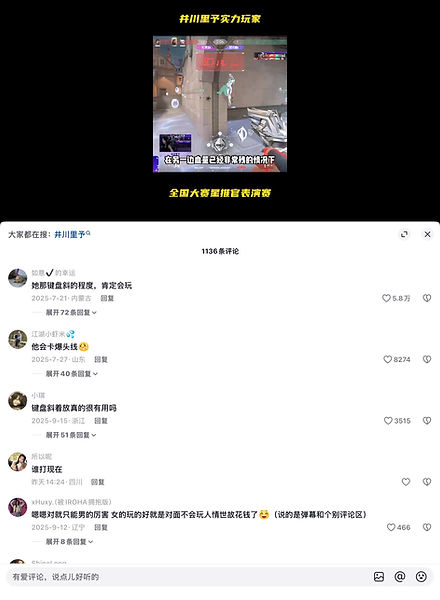
I can tell that she is great from the way she use her keyboard
She know how to aim headshot line!!!
Yeah, only lads can play games well. If a girl’s any good at them, she must be using cheats.
She is so cute
Elon Musk — The Rejected Celebrity
Who he is
Elon Musk is one of the most globally recognised public figures, whose influence extends far beyond gaming culture. His presence in VALORANT-related events comes not from within the community, but from his broader status as a celebrity and entrepreneur.
Why he is visible
His visibility is immediate and overwhelming. Unlike other figures in this artefact, Musk does not need to “build” visibility within VALORANT. His appearance at events or within the game space is amplified by mainstream media attention and his existing global recognition.
Fan response
Despite this, fan reactions are often negative or dismissive. Reports of audiences booing or rejecting his presence highlight a clear disconnection. Rather than being welcomed, he is frequently positioned as irrelevant or intrusive. In this case, visibility produces friction rather than acceptance.
What this shows
This case exposes the limits of visibility as a form of cultural capital. While Musk possesses extreme levels of fame, this does not translate into legitimacy within the VALORANT fandom. In fact, his presence reveals that legitimacy is not transferable across contexts.
More importantly, this suggests that fandom operates through its own internal logic of value. As Jenkins (2018) argues, fandom is not simply about consuming media but about collectively negotiating meaning. In this process, communities also define boundaries—deciding who belongs and who does not. Musk’s rejection demonstrates that even the most powerful forms of external visibility can be overridden by internal community judgement.
This raises a critical implication: micro-celebrity is not determined by scale, but by alignment. Being visible is not enough. One must also be recognised as meaningful within the cultural framework of the community. When this alignment fails, visibility can even become a liability.


Can you pass the Authenticity Test?
Not everyone who appears in VALORANT is recognised by its community.
Visibility alone is not enough. What matters is whether someone is read as belonging.
This “test” is not official, but it quietly shapes how fans judge who counts — and who does not.
“What this reveals”
VALORANT fandom does not simply celebrate celebrity.
It produces it — and sometimes refuses it.
Formative Commentary
By Eden Zhou
What led me to build this artefact was not the game itself, but a moment of dissonance. I had never really engaged with computer games before. My first encounter with VALORANT came through short videos on Chinese social media, where a female influencer I already knew appeared in a celebrity tournament and performed unexpectedly well. What stayed with me was not her gameplay, but the reaction: some fans celebrated her as “legit”, while others dismissed her as an outsider. It was in that moment that I realised visibility does not guarantee belonging.
This tension became the starting point of Clout Ladder. At first, I approached celebrity through scale—followers, exposure, recognisability. But this quickly broke down. Some figures remain marginal despite constant visibility, while others are treated as insiders regardless of measurable reach. This suggests that fandom does not simply reflect fame; it actively reorganises it.
Jenkins (2018) frames fandom as a space of negotiation, where meanings are not fixed but constantly reworked through collective interpretation. However, what became more apparent in this process is that this negotiation is not neutral. As highlighted in the module, fandom is a site of struggle rather than a harmonious community . In VALORANT, fans continuously evaluate who counts as “one of us”, drawing boundaries through shared expectations of knowledge, participation, and legitimacy.
Authenticity, then, is not a stable attribute but something actively produced—and withheld. Gray (2005) shows that anti-fandom is not external to fandom but constitutive of it. Labelling someone as a “tourist” or “clout chaser” is not simply expressive; it is regulatory. It determines who can occupy a position within the community. This resonates with Abidin’s (2018) argument that internet celebrity operates within an attention economy, where visibility is unevenly distributed and often shaped by broader media structures rather than individual merit .
At the same time, recent work in fan studies suggests that these dynamics extend beyond entertainment. Petersen et al. (2024) argue that fan practices increasingly permeate other domains, including politics, where participation can become both creative and exclusionary . This complicates the idea of participatory culture as inherently empowering.
The design of my artefact attempts to materialise this argument. Drawing on social semiotics, I treat layout, image, and text as meaning-making resources (Jewitt and Henriksen, 2016). The ladder structure visually stages hierarchy. Using principles of information value, the upper sections suggest “ideal” insiders, while lower or marginal positions indicate more contested figures . Differences in size and placement create salience, guiding interpretation.
Fan comments are central to this structure. They demonstrate how meaning is produced collectively through shared discourse . Yet this process is not purely creative. It is also disciplinary. The same community that legitimises certain figures simultaneously excludes others.
What remains unresolved for me is whether authenticity is ever “real”, or whether it is always the outcome of collective judgement. If the latter is true, then micro-celebrity is not something one becomes—but something one is allowed to be.
Reference List
Abidin, C. (2018) Internet Celebrity: Understanding Fame Online. Bingley: Emerald Publishing.
Gray, J. (2005) ‘Antifandom and the moral text: Television Without Pity and textual dislike’, American Behavioral Scientist, 48(7), pp. 840–858. doi: 10.1177/0002764204273171.
Jenkins, H. (2018) ‘Fandom, negotiation, and participatory culture’, in Booth, P. (ed.) A Companion to Media Fandom and Fan Studies. Hoboken, NJ: Wiley Blackwell, pp. 11–26. doi: 10.1002/9781119237211.ch1.
Jewitt, C. and Henriksen, B. (2016) ‘Social semiotic multimodality’, in Klug, N.-M. and Stöckl, H. (eds.) Handbook of Language in Multimodal Contexts. Berlin/Boston: De Gruyter, pp. 145–164. doi: 10.1515/9783110296099-007.
Petersen, L.N. et al. (2024) ‘New territories for fan studies: The insurrection, QAnon, Donald Trump and fandom’, Convergence, 30(1), pp. 313–328. doi: 10.1177/13548565231174587.